
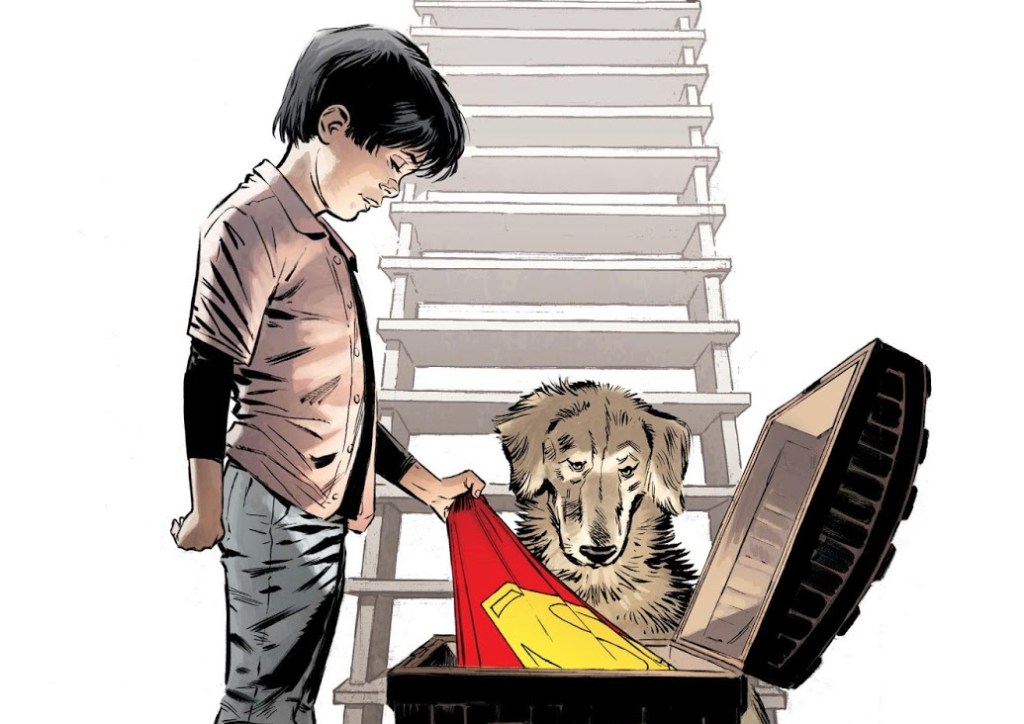
In 2011, Superman’s marriage to Lois Lane – which had taken place in 1997, and remained in-continutiy for almost 15 years – ended abruptly when DC rebooted its entire main-line comics universe.
The New 52, a status quo change introduced after the conclusion of Flashpoint in 2011, kicked off the new universe, and introduced DC fans to a version of Superman who was younger and less experienced. His role as the elder statesman of the superhero community was stripped from him, since the world at large didn’t trust extraterrestrials. A younger, less-established Superman had to face that discrimination.
Part of being younger was that Clark Kent was no longer a married man. Coming not too long after the devilish dissolution of Spider-Man’s marriage in 2007, a Lois and Clark split had been rumored numerous times, but it wasn’t until DC fully hit the reset button that they had the courage to try it out.
For anybody who fell away from DC Comics during the New 52 era – and, according to sales numbers, that was a lot of people – it may have been confusing to see that, by 2016’s Rebirth initiative, Superman and Lois were not only remarried…but had a ten-year-old son with super powers.
The explanation, as you might expect in the DC Universe, is complicated.
The New 52
The New 52 was pitched as a near-total reboot of the DC Universe, but there were some comics, some characters, and some backstory that was considered too “important” to lose. For instance, the Batman and Green Lantern titles as a whole were more or less unchanged, because those books were doing very well, and being written by creators who wielded considerable influence at DC. Nobody was going to tell Grant Morrison that they couldn’t finish the story they set out to tell on Batman, and nobody was going to tell Geoff Johns…well…anything he didn’t want to hear, since his senior management role at Warner Bros. made him arguably more powerful than any of his editors.
This piecemeal approach posed some problems for the shared universe at DC. After all, if Green Lantern: Rebirth – the story that kicked off Johns’s run on Green Lantern but which makes no sense without the events of Emerald Twilight – couldn’t be retconned, what does that mean for The Death and Return of Superman, which kicked off Emerald Twilight itself? Without the destruction of Coast City in “The Reign of the Supermen!,” that story falls apart quickly.
How does the Dick Grayson’s time as Batman work in a universe where it seems Final Crisis, and thus the fake-out death of Bruce Wayne, never happened?
You get the idea.
These problems were never fully resolved during the New 52 era, although editorial (and creators) were constantly wrestling with them. Did “The Death of Superman” happen? Well, probably, since it’s one of DC’s evergreen, best-selling graphic novels. But where does it fit in Superman’s five-year timeline? Who knows? Also, the versions of Superboy, Steel, the Cyborg Superman, and the Eradicator we met in The New 52 have nothing to do with the versions from “Reign of the Supermen!.”
What was absolutely clear was that the New 52 Superman was never married to Lois Lane.
As reader enthusiasm and overall sales for the New 52 titles declined, DC decided that it was time to shake things up. A series of event comics, beginning with 2015’s Convergence, would attempt to incorporate the popular changes of the New 52 era into a more conventional approach to the DC Universe.
How the Marriage Happened
After DC’s first major reboot, the ‘80s classic Crisis on Infinite Earths, the DC multiverse was destroyed. A single Earth now featured all of the DC heroes who still existed in the new timeline, and from around 1986 until 1999, DC had a tightly-ordered continuity that was pretty easy to keep track of.
In that post-Crisis continuity, Clark Kent was less of a nebbish. He was never as good a reporter as Lois Lane, but the two were competitors in a meaningful way, suggesting he was a great reporter in his own right. He also wrote novels and won awards of his own.
(If you read 1994’s Superman: Under a Yellow Sun by John Francis Moore and Eduardo Barreto, you’ll get to see a comic book version of one of Clark Kent’s Tom Clancy-style adventure books!)
That version of Clark didn’t have the same trouble attracting Lois Lane that the pre-Crisis Clark did, and their romance started fairly early on in the post-Crisis era. They were engaged in 1990’s Superman #50. The plan at the time was to marry the pair somewhere between Superman #75 and The Adventures of Superman #500, but as most comics fans know, that’s not how things worked out.
“The wedding scenario was put on hold, because Warner Brothers had gotten the green light to produce the Lois & Clark television series for ABC,” writer Roger Stern told me in 2012. “They didn’t mind us having Clark and Lois marry, just as long as they got to set the stage for the wedding first on TV. So we had our work cut out for us. Everything that we’d been working toward had to be delayed. Not too surprisingly, there was a lot of chaos on the first day of the Summit, with all of us brainstorming new ideas. Somewhere in there, Jerry [Ordway] tossed out his usual ‘We could always kill him’ gag. And someone else … Dan [Jurgens]? Louise [Simonson]? [Jon Bogdanove]? I don’t remember now. Someone else chimed in with, ‘Yeah, if we can’t marry him, let’s kill him,’ or words to that effect. At that point, Mike Carlin, showing great editorial acumen, replied, ‘All right, wise guys, suppose we kill him. What happens next …?’ And that was when the ideas really started flowing. How does the city react when Superman dies? How does the world react? How does Lois react? Don’t forget, she was one of a handful of people on the face of the Earth who knew that Clark Kent was Superman. She was engaged to him. And now, she still can’t tell anyone, because it would endanger his parents.Within a few hours, we had so many ideas, that we couldn’t not do the story.”
The Death and Return of Superman story defined the character in the 1990s and remains one of the most popular arcs in Superman’s history. It has been adapted into movies, TV, animation, and video games, as well as a novelization by Stern himself. But it meant any plans of getting Lois pregnant was put off for a while.

By the time the pair got married in 1997, the hype from the post-Crisis era was starting to wind down and many of the creatives that made that period special were moving on. The people who established Lois and Clark’s relationship dynamics, by and large, didn’t get to do much with a married Lois and Clark, and in some cases, the new creative teams seemed resentful of the marriage.
Dan Jurgens, who wrote and drew the actual death of Superman in Superman #75, was a rare exception to the rule: his connection to the character was undeniable, and he was periodically brought back to do special Superman stories in the years following his departure. Often, his comics would lean into the ‘90s characterization of Lois and Clark, making the books feel nostalgic for readers of that era.
Over the following decade or so before the Flashpoint reboot, DC seemed ambivalent about the Superman wedding, with some writers and fans making the same arguments about the challenges of writing a happily-married couple that had doomed Peter Parker and Mary Jane’s marriage over at Marvel. It sometimes felt inevitable that the marriage would eventually be retconned away, but it was clear they were unlikely to pull the same kind of shenanigans Marvel had, since One More Day had largely landed with a thud with readers. A realigned timeline was the cure for their ills, and gave them the perfect way to split up the happy couple, science fiction-style.
Convergence, Or How Superman and Lois Managed to Raise a Ten-Year-Old in Five Years
The end of the New 52 came as a series of creeping changes, rather than the universe-altering event that served as its beginning. But that doesn’t mean there weren’t Big Event Comics that fed into it.
The first of these was Convergence, which launched in 2015. But first, let’s take a very brief digression back to the beginning of the New 52.
When the reboot happened, it was launched in Justice League #1 by Geoff Johns and Jim Lee. The book took place “five years ago,” according to caption boxes, while the other New 52 books happened in the present day (excepting Action Comics). And while superhero books typically have “rolling timelines” that allow characters to remain fairly static, The New 52 seemed to take place more or less in real time, meaning that the time lapse between Justice League #1 (and Superman’s first meeting with most of DC’s other big heroes) and Convergence #1 was a little less than five years.
Believe it or not, this is relevant later.
In Convergence, fans learned that a version of Brainiac and a minion of his known as Telos had been stealing cities and placing them on in domes on a planet (also called Telos) for years. Specifically, Brainiac was stealing cities just moments before their worlds’ final destruction.
It was, essentially, DC’s version of Jonathan Hickman’s Secret Wars. A number of popular timelines/alternate realities all competed to see what world would survive a multiversal purge when Telos ran out of real estate and Brainiac, defeated by Superman, failed to return to the project to help out.
Various realities were mashed together, including characters from Kingdom Come, Flashpoint, a few pre-Crisis on Infinite Earths worlds, and the post-Zero Hour and post-Infinite Crisis versions of “New Earth,” the in-universe term for the world that was created after Crisis on Infinite Earths.
In Convergence: Superman, writer Dan Jurgens revealed that the post-Crisis, pre-Flashpoint Superman was alive and well — as was Lois Lane — on Telos. In the picoseconds before Flashpoint wiped out the DC Universe and rewrote its history, Telos stole Metropolis and put it under a dome that dampened Clark’s powers.
There, Clark and Lois lived together and, without the inherent risk that being pregnant with a super-powered baby would pose, the two decided to have a child. Lois was very pregnant at the start of Convergence and gave birth by the end of the story, introducing Jonathan Kent to the world with a little help from Dr. Thomas Wayne (from the Flashpoint universe).
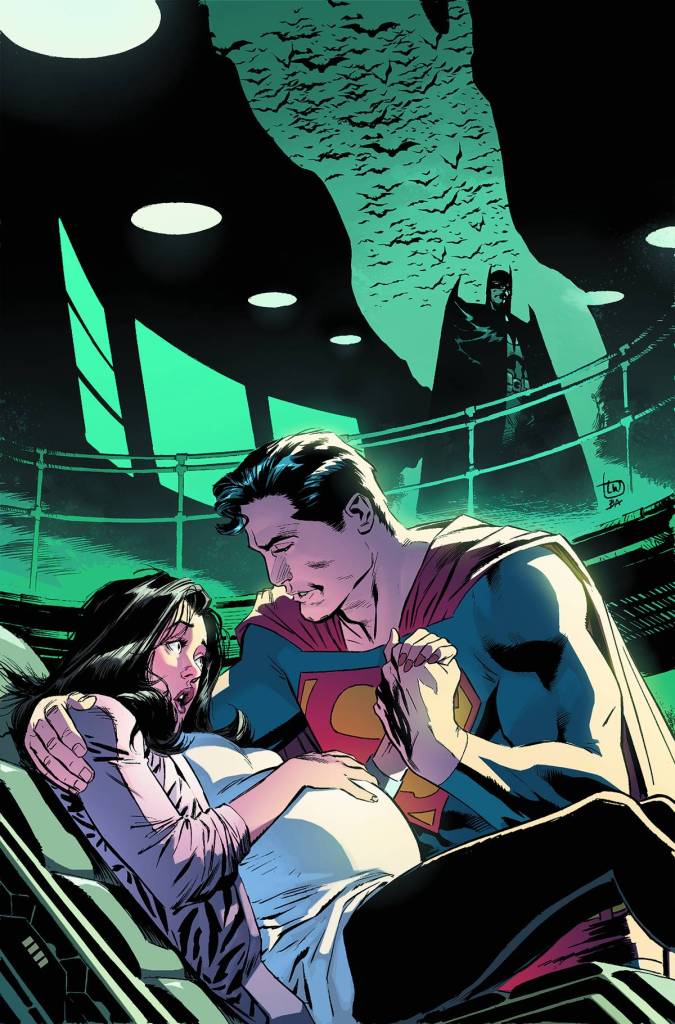
Following the events of Convergence, the promise of one universe surviving didn’t quite work out. Instead, a number of heroes — including Superman, the pre-Crisis Supergirl, and Parallax from Zero Hour — teamed up to do some comic book science that saved the multiverse and left them stranded in time. Parallax’s story picked up in Telos, a comic following the Convergence villain as he sought redemption, and Superman’s story continued into Superman: Lois & Clark.
In Lois & Clark, Superman and Lois were living in the New 52 timeline, with Clark operating secretly, wearing a beard and a black suit. Rather than fighting supervillains in public, Clark worked behind the scenes, trying to help people in emergencies and even preventing some supervillain origin stories, using his knowledge of the previous timeline.
The first issue of the miniseries revealed that, following Convergence, Superman, Lois, and Jon were spat out during the events of Justice League #1, but Clark resisted the urge to make himself known because he had faith in that world’s heroes.
That means, by the time Lois & Clark started, Jon Kent had aged those initial five years, pluc the five-ish that the New 52 had been around. Suddenly, just months after fans discovered that Lois was pregnant, the super-couple had a ten-year-old.
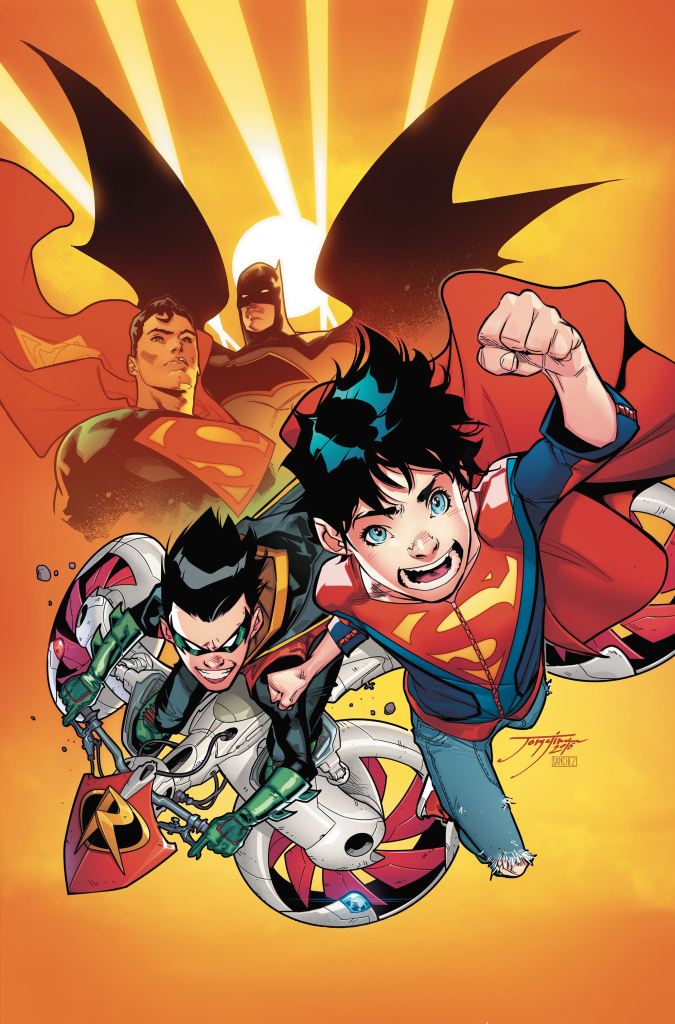
Not long after, the New 52 Superman died, and the “classic” Superman stepped up to take his place, allowing the Kent family to move back to Metropolis and Clark to shave. That kicked off DC’s Rebirth era, with Jurgens writing Action Comics and Pete Tomasi writing Superman. The books were huge hits, and after a few months, crossed over in Superman Reborn, a story that used Mr. Mxyzptlk as a plot device to unite Superman and Lois with the souls (I think?) of their New 52 counterparts.
Following that story, the world believes they were always the same people, and the current Superman and Lois have the memories of both sets of characters.
After Jurgens left Action Comics, he was succeeded by Brian Michael Bendis, who aged Jon up significantly as part of a larger move by DC to introduce a new generation of their A-list heroes. The move was controversial, and has been partially walked back, but the short version is that Jor-El (Superman’s biological father) survived the destruction of Krypton and, after being a villain for a while, abducted Jon and had adventures with him in space for a few years, then time-traveled back to the “present day” comics with an older version of his grandson.
But I hate that story, so I won’t be writing another 2,000 words to explain it.




 Emerald City Video
Leave a comment