
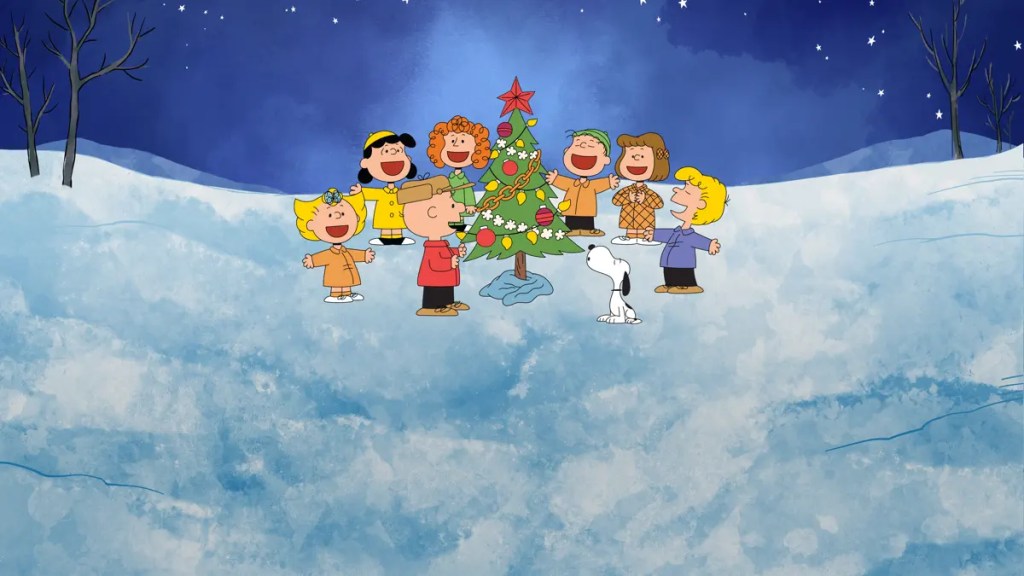
Sesame Street is walled up on Netflix, and you can’t buy or rent a digital copy of A Charlie Brown Christmas. This is the state of beloved, classic children’s media in 2025.
Ever since the Peanuts holiday specials — including It’s the Great Pumpkin, Charlie Brown, A Charlie Brown Thanksgiving, and A Charlie Brown Christmas — went exclusive to Apple TV a few years ago, parents (and older fans) have lamented that the holiday classics were no longer airing for free on broadcast television.
Apple, in order to soften the blow, started making the specials available for free once a year — first by allowing PBS to air them and more recently by designating a period during which non-subscribers can stream them on Apple (this year, it’s December 13 and 14).
But for anyone who wants to see A Charlie Brown Christmas before or after that weekend, the only way to go is physical media. That’s because, unlike most of the Peanuts specials and TV shows, the holiday specials in particular are unavailable to rent or purchase in digital form. You can only see them by streaming them on Apple.
(That is, of course, as long as you didn’t already own a copy before the changes made to the licensing deal. My years-old copies of the movies are all sitting happily in my library.)
Traditionally, when a movie becomes totally unavailable in this way, it’s due to some spectacular SNAFU on the licensing side (think Dogma or 28 Days Later for example). Often, the DVDs and Blu-rays will see a spike in resale prices as fans surge to replace missing copies, although that feels unlikely in the case of A Charlie Brown Christmas, given how incredibly common the DVD has been for the entire life of the format.
Nevertheless, the idea that families who have “upgraded” away from physical media are not going to be able to get their hands on one of the most beloved animated holiday movies of all time…not great.
Granted, there aren’t that many five-year-olds who are desperate for A Charlie Brown Christmas, but it isn’t like the new PAW Patrol Christmas special is any more easily accessible. The reality is, kids’ media has been particularly hard-hit by the move to streaming exclusives.
The reason is simple: parents are under more pressure to pay for kids’ content than the average consumer is for any other type. Kids don’t understand the vagaries of licensing agreements, they just want to see the show they want to see. Again and again.
The issue here is arguably bigger than A Charlie Brown Christmas or even Sesame Street. The issue is that the Peanuts move is an aggressive one. Essentially, part of Netflix’s licensing deal with WB appears to have been contingent on entirely removing the movies from digital marketplaces, making their exclusive more valuable but also cutting the art off even further from the audience. This is, importantly, exactly the kind of thing that companies love to do.
I would argue that when you see any company doing this — demanding full exclusivity for purchases, not just streams — it’s better for you as a consumer not to fall for it. Go get yourself a DVD (or a Blu-ray, or a VHS tape) and go to town. A DVD or Blu-ray should end up cheaper than a month of Apple TV anyway, and it helps tell the companies that these approaches do not work. The more people who sign up for a trial month, the more Apple will think “remove the product entirely from the market” is a viable strategy.
Cinephiles are fairly used to streaming platforms that trade exclusives back and forth, but there is a general understanding that the vast majority of movies that have ever been digitized, can be purchased legally and for a reasonable price on most digital sales and rental platforms. If we get to a point where sales and rentals are also hotly-contested exclusives, it will make owning a home video library more difficult, less fun, and more expensive as users have to keep subscriptions to every major streamer lest you be left without.



 Emerald City Video
Leave a comment